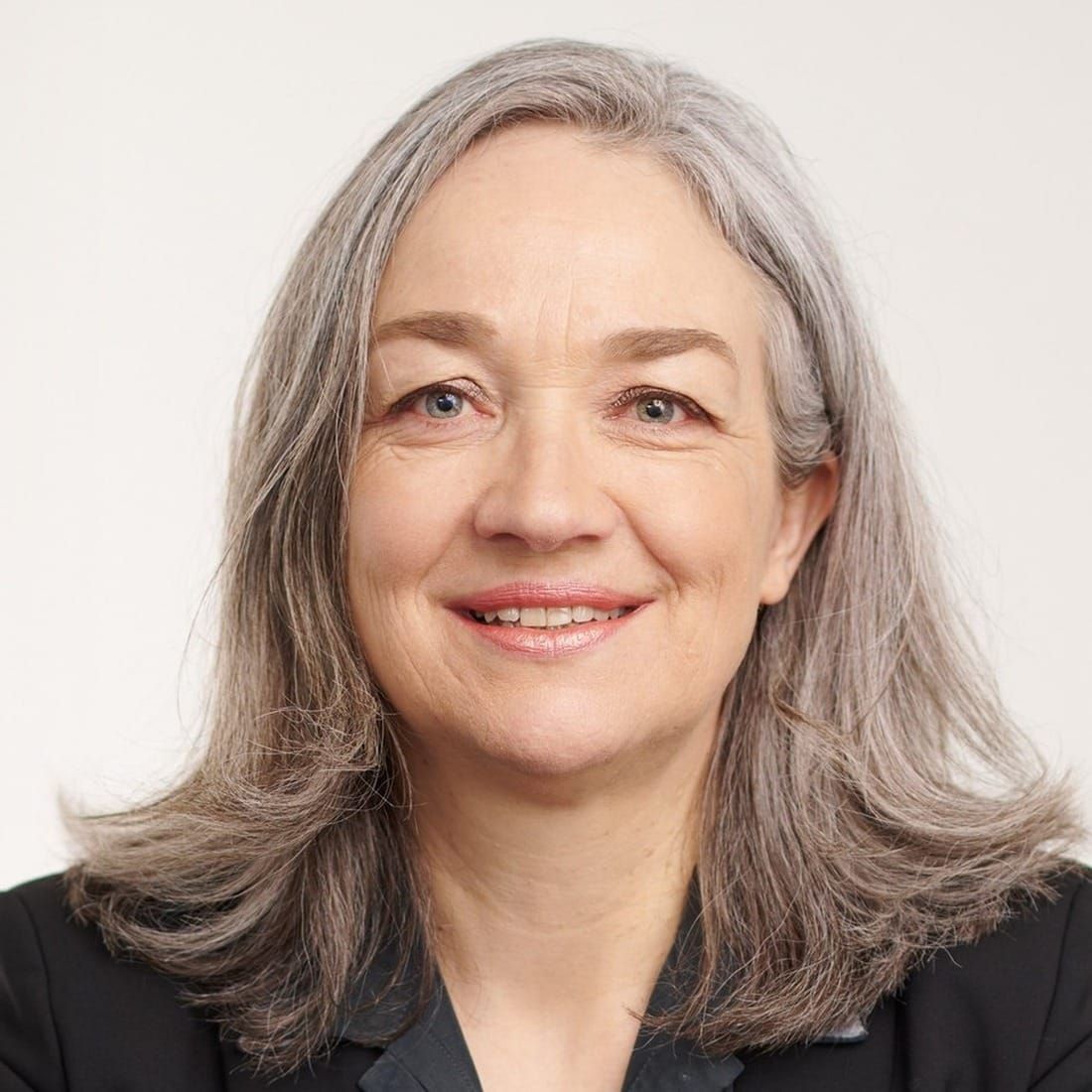
She decided at thirteen to become a pastor, and Guareschi's books about Don Camillo inspired her. Today Esther Straub leads the Reformed Church of the Canton of Zurich, the church of Zwingli, where the first women in Europe were ordained in 1918.
Av Maria Solbak Årnes · Written answers from Esther Straub, President of the Church Council of the Reformed Church of the Canton of Zurich, Switzerland · 17 October 2026
Zwingli's church
MARIA Tell us briefly about yourself and where you serve today.
At the age of 13, I decided to become a pastor. After studying theology, I spent five years as a research assistant in New Testament studies at the University of Zurich, where I earned a doctorate in theology. I then served as a pastor in the city of Zurich for 20 years, while also holding various political and church-related positions. Today, I serve as President of the Church Council, the executive body of our reformed church of the Kanton Zurich (Huldrych Zwingli).
Esther Straub is President of the Church Council (Kirchenratspräsidentin) of the Evangelical Reformed Church of the Canton of Zurich, the church that traces its Reformation to Huldrych Zwingli. When she was nominated in 2023, she was a pastor in Zurich Nord and had served eight years on the Church Council. She earned her doctorate at the University of Zurich, and sat for nine years on the Zurich city council and for two terms in the cantonal parliament. She is married and has three teenage children. Sources: zhref.ch, nomination 2023, and Esther Straub herself.
Don Camillo
MARIA When did the calling come? Please describe the day, or the conversation, if you can.
I wouldn't describe it as a calling. Reading Giovannino Guareschi's books «Don Camillo and Peppone» inspired me to become a pastor. The idea never left me and faith sustained me through my studies and ministerial activities. I could never imagine any other profession. I'm very grateful that I was given this kind of inspiration.
Don Camillo. The Italian writer Giovannino Guareschi published the first book of his stories, «Mondo piccolo: Don Camillo», in 1948. Set in a small town in the Po Valley in northern Italy after the Second World War, they follow the hot-headed parish priest Don Camillo and the communist mayor Peppone, who are constantly at odds but respect each other and work together in hard times. In the first film, «Don Camillo» from 1952, Fernandel played the priest. Source: Wikipedia.
MARIA Was there ever a time you thought you couldn't follow the calling because you are a woman?
No, never. Quite the opposite! In the scriptures, I discovered the important roles women held already in the time of Jesus and Paul. I never understood how the ministry could have been restricted to men in the first place.
I never understood how the ministry could have been restricted to men in the first place.
The Spirit blows where it will
MARIA What is the Bible to you? Do you believe the Holy Spirit was present when it came into being? In what way?
The Holy Spirit was certainly involved. His (or her?) way is always open (Joh 3,8). For me, the Bible bears witness to lived experiences of faith that carry authority for our faith community. It is the task of theology and the faith community to explore and discuss how these testimonies should be understood today.
MARIA What protects you from interpreting it wrongly?
The Holy Spirit, and the discussions and debates at the university and in the church.
MARIA Do you believe Jesus is the only way to salvation? Why, or why not?
I believe it for myself, but I would never deny the faith of anyone who believes differently. The ways of God are unfathomable.
For me, the Bible bears witness to lived experiences of faith that carry authority for our faith community.
A later hand
The questions that followed were objections raised by others in this series.
MARIA Paul grounds 1 Corinthians 14:34-35 and 1 Timothy 2:11-12 in creation, not in the conditions in Ephesus. What do you make of the reasoning he himself gives?
In biblical scholarship, 1 Corinthians 14:34-35 is a classic example of a later interpolation. These verses contradict 1 Corinthians 11:5, do not fit the context, and are absent from some early manuscripts at this point. They closely resemble 1 Timothy 2:11-12. New Testament scholars generally attribute 1 Timothy not to Paul but to a later author; it is one of the Pastoral Epistles. There are several indications of this, including its markedly different vocabulary and style, its different theology, its difficulty in fitting into Paul's lifetime, and its well-established church structure and hierarchy, unlike Paul's.
I do not understand this text as normative, but as reflecting the patriarchal culture of its time, a culture that Jesus and Paul clearly challenged.
To three of the later objections she referred back to this answer: that 1 Timothy 3:14-15 says the letter concerns how one is to conduct oneself in the household of God; that Paul himself distinguishes between custom and principle within the same chapter; and that Deborah acted within the existing framework and sent Barak.
I do not understand this text as normative, but as reflecting the patriarchal culture of its time, a culture that Jesus and Paul clearly challenged.
Junia, Phoebe, Priska
MARIA Junia: The word apostolos is not a technical term. It is used of messengers in 2 Corinthians 8:23 and of Epaphroditus in Philippians 2. What does that do to Romans 16:7 as evidence for the office?
There is no evidence that Paul worked only with men. On the contrary, many important women worked alongside him like Junia, Phoebe, Priska and more. We see the same with Jesus. Sadly, later church leaders adopted the patriarchal structures of their society, pushing women aside and excluding them. What a disgrace!
MARIA Phoebe: The word diakonos has a broad range of use. What in Romans 16:1 shows that she held an office?
What man held an «office» in Paul's time, anyway? What titles did Timothy, Barnabas, or Silas have? Paul calls them co-workers, brothers, or sons. That is true Christianity: no hierarchies, but «co-workers for your joy» (2 Corinthians 1:24), "body of Christ", no one lords it over another, ministries that are not determined by gender.
That is true Christianity: no hierarchies, but «co-workers for your joy» (2 Corinthians 1:24), "body of Christ", no one lords it over another, ministries that are not determined by gender.
MARIA The witnesses at the tomb were women: the argument presupposes that the pulpit is the place of greatest significance. Why should the task of informing the apostles be read as an office?
The women were the first witnesses to the resurrection. That is enough. It says nothing about church offices today, except that it once again reminds us that men are not the only witnesses.
The message of the cross
MARIA Galatians 3:28: The verse concerns one's standing before God, not the distribution of roles. What in the text turns it into a rule about office?
As already mentioned, rules about church office should not be derived from isolated Bible verses. It is rather a matter of fundamental theological reflection: the message of the crucified one who was raised calls us to dismantle hierarchies (1 Corinthians 1:18-2:5), including, not least, male domination over women.
MARIA Can women receive the spiritual gift of preaching? The gift does not in itself grant a right to every office. How can one, on a biblical basis, argue that if one receives a spiritual gift from God, one may disregard 2,000 years of church tradition?
Women were preaching long before that. And what does 2,000 years of tradition prove, anyway? Should nothing ever change? Should men rule over women simply because they always have? Huldrych Zwingli fundamentally reformed the Church in Zurich 500 years ago, and the Reformed Church understands itself as a church that must continually be reformed. Nevertheless, it was only about 100 years ago that the first women were ordained in the Reformed Church.
And what does 2,000 years of tradition prove, anyway? Should nothing ever change?
MARIA How do you distinguish what is binding from what is culturally determined, when the author himself states his reasoning?
With the Holy Spirit and with common sense.
MARIA That all reading involves interpretation does not make every reading valid. Which readings fall outside the bounds, and what excludes them?
Any interpretation that contradicts the message of Christ crucified, for example, one that places men above women.
MARIA Paul lived after the new creation had begun, and gave the command nonetheless. The dietary laws and circumcision are explicitly set aside in the New Testament. What sets this command aside?
Paul's conviction and faith was that God is revealed in the crucified Christ. It is not our laws that determine things, but God's grace alone. There is neither Jew nor Greek, neither slave nor free, neither male nor female.
MARIA God does not call against His own word. How do you test an inner calling against what is written?
The Scripture contains many apparent contradictions. The point is to be inspired by the gospel, the power of God (Romans 1:16), and to live and preach authentically out of this movement of faith.
Any interpretation that contradicts the message of Christ crucified, for example, one that places men above women.
Did he not?
MARIA Ephesians 5 binds home and church together in a single image. Why can the two be separated? What are your thoughts on the woman's role in that connection?
Ephesians, too, is a letter by a disciple of Paul, and on the question of patriarchy it remains bound to the assumptions of its time.
MARIA Jesus repeatedly rejected religious leaders. Why did he appoint no female apostle?
That remains an open question. Did he not? We don't know! I can well imagine that Jesus sent women out too, and that they were present at the Lord's Supper.
MARIA The priesthood is ontological, not functional: the priest stands in persona Christi as bridegroom before the bride. How would you respond to that?
That is Catholic teaching. I'm Reformed, and I really can't relate to it at all.
In the Bible, there isn't a passage that explicitly discusses Jesus's gender. The term “bridegroom” is used metaphorically, not ontologically. Jesus is referred to as a man, but the gospels and Paul don't offer a separate theological discussion of his gender.
That remains an open question. Did he not? We don't know!
More than a hundred years
MARIA The American mainline denominations that defended the ordination of women in the sixties and seventies now accept same-sex relationships, and the argument against both is the same: the created order. What do you think of that?
Our Reformed Church (the largest church in our region) began ordaining women more than 100 years ago, and it has also been blessing same-sex couples for decades. Paul would have done the same in our time. That is my sincere and deeply held belief.
The first women ordained in Europe. In 1918 Rosa Gutknecht and Elise Pfister were ordained pastors in the Reformed Church of Zurich. Gutknecht had completed her theology degree at the University of Zurich that year. They are regarded as the first women in Europe ordained as pastors. Their conditions were restricted: they were appointed assistant pastors at the Grossmünster, and in 1920 the authorities ruled that women could not hold publicly funded posts such as leading their own parishes. Gutknecht remained an assistant pastor for the rest of her career. Source: Wikipedia.
Portrett
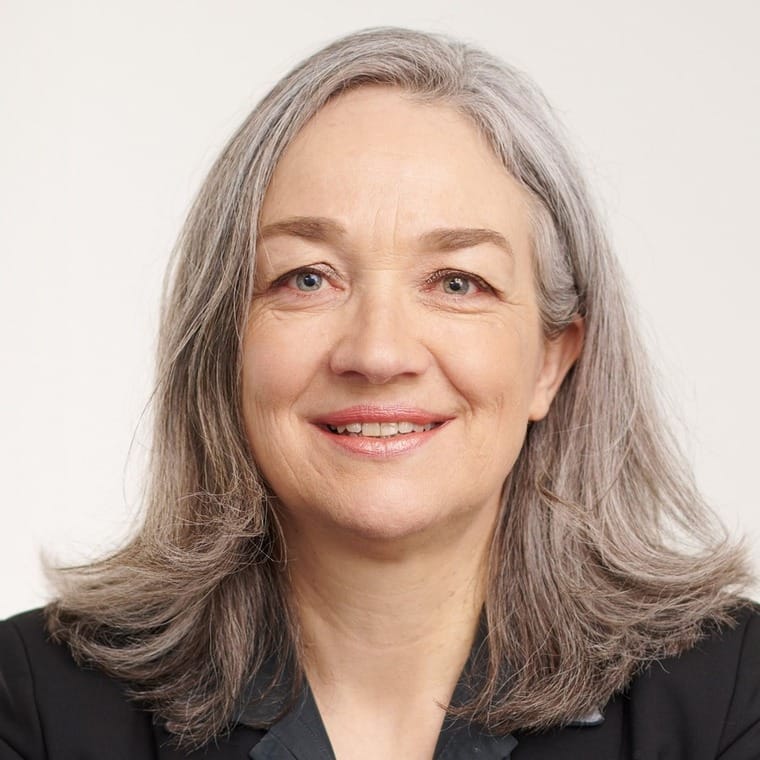
Esther Straub, President of the Church Council of the Reformed Church of the Canton of Zurich. Photo: Theodor Stalder.
Terskelen
Straub decided at thirteen to become a pastor, after reading Guareschi's books about Don Camillo. The idea never left her. She spent five years in New Testament research, twenty years as a pastor in Zurich, and now leads the church of Zwingli. That church ordained the first women in Europe in 1918.
She argues as a New Testament scholar. She reads 1 Corinthians 14:34-35 as a later interpolation, and 1 Timothy and Ephesians as letters by later hands. Her criterion is the message of the crucified one who was raised, which calls the church to dismantle hierarchies. On the twelve, she answers that we do not know.
Asked how she tells what is binding from what is cultural, she answers: with the Holy Spirit and with common sense. The men in this series who hold the opposite view will ask what remains of the canon's authority when the passages that speak most directly to the question are given to later hands. They have the floor first.